
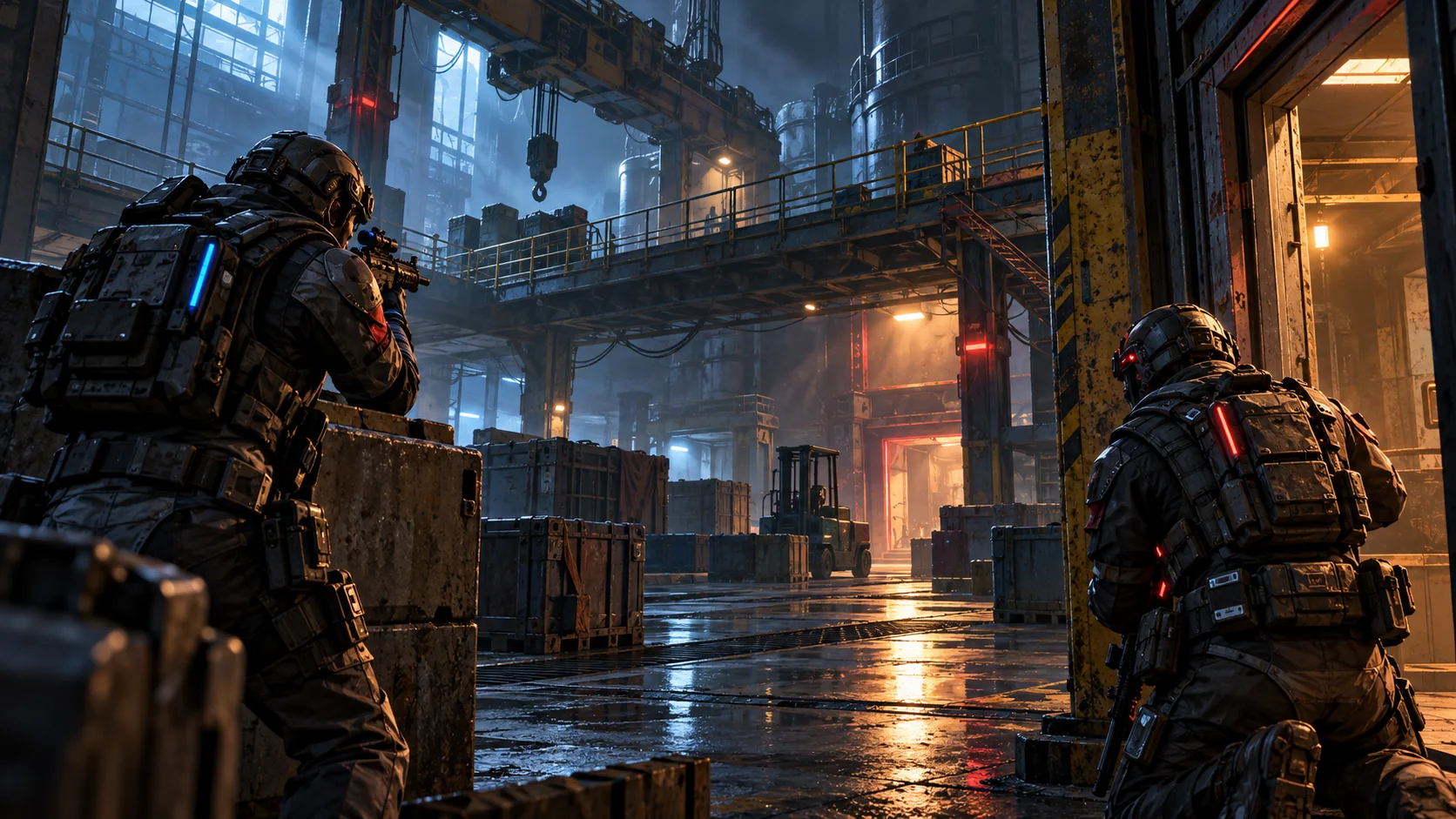
In WolfTeam Legacy your wolf is never just one shape. Before the fighting starts, the Select Mutation screen asks you to commit: which wolf will you be this round? Seven mutations answer that question, from the straightforward muscle of the Power Wolf to the erratic Psycho Wolf, and the difference between them is the difference between wandering the map and hunting it. This guide walks through every wolf type on Wolfory, how the selection works and how to practice each form without spending a single coin.
One mutation, one round
When the round begins, the mutation screen makes the rules clear: "Please choose a wolf mutation for this round." The Turkish client says the same thing in plainer words — pick the mutation you will use this round. Your choice is a per-round commitment, not a permanent class. You can play Guardian one round and Ice the next, and the selection screen will meet you again at the start of every round.
The controls are as simple as it gets: the number keys 1 through 7 select your wolf. The in-game tutorial spells it out — keys 1-7 are the wolf select. Key 2 is the Guardian, key 6 is the Ice Wolf, and the rest of the line-up fills the spaces between.
The seven wolf types
The classic roster has kept the same seven mutations for years, and the Turkish names are worth learning because your teammates use them in chat:
1. Power Wolf (Güç Kurt) — the tutorial's teaching wolf. It is the form the game uses to show the basic attack and the strong attack, and it plays exactly as the name promises: direct, heavy and honest. 2. Guardian Wolf (Gardiyan Kurt) — the game text names its special skill as defense. When your team needs someone to hold a corner and survive the exchange, this is the form that does the unglamorous work. Older Turkish tutorial text calls it Koruyucu Kurt — same wolf, heritage naming. 3. Ghost Wolf (Hayalet Kurt) — its named special skill is hide. The Ghost trades raw power for simply not being where you expect it, and patient players turn that into free approaches. 4. Smart Wolf (Zeki Kurt) — the game describes its special skill as hanging on the wall. Walls stop other wolves; for the Smart Wolf they are a path. Some Turkish tutorial text uses the name Akıllı Kurt for the same type. 5. Berserker Wolf (Vahşi Kurt) — the game's own text lists its special skill without further description, and that is the honest state of the classic client: you learn the Berserker by being one. 6. Ice Wolf (Buz Kurt) — another form whose special skill the text leaves unnamed. The training missions pick it for basic-attack practice on bots, which tells you it is meant to hold its own in a straight fight. 7. Psycho Wolf (Deli Kurt) — the last numbered slot, again with an unnamed special skill. The name is a fair warning: this is the form you pick for chaos, not for routine.
Alongside the seven, the roster also lists the plain Normal Wolf (Normal Kurt) and a separate Ghost Wolf-2 (Hayalet Kurt-2) entry — a quiet sign that the wolf list holds more than the first page shows.
Attacks every wolf shares
The mutation changes what your wolf can do, not how you fight it. Every wolf uses the same grammar: the left mouse button is the basic attack, and Space plus the right mouse button is the strong attack. The tutorial teaches this pairing with the Power Wolf, but the muscle memory transfers to all seven forms. Learn the rhythm once and every mutation inherits it.
The second mutation page
There is more behind the seven. The Turkish client carries a hint in its own controls text: press SHIFT to reach the other wolves — and it adds a condition, the 2nd Wolf Mutation item. In other words, the first page of mutations is the base experience, and a second page opens for players who own that item. The separate Ghost Wolf-2 entry in the roster is the visible footprint of those extended forms. If you are new, ignore the second page for now: the first seven will keep you busy for weeks.
Practice every type for free
You do not have to learn mutations in live matches, and honestly you should not. Create an AI Deathmatch room, choose Arrival, click AI ADD on an empty opposing slot, select EASY and press START. Bot training awards no Gold, GP, WC or goal progress — which is exactly what makes it the perfect laboratory. No rewards means no pressure, and no pressure means you can die twenty times figuring out a wall approach and nobody's score suffers but your curiosity's.
A simple routine: spend one session on the Guardian (key 2) and one on the Ice Wolf (key 6), the two types the training missions themselves put on the practice list. Then give the Ghost a session of pure sneaking, the Smart Wolf a session of wall routes, and only then step into the Berserker and the Psycho. By the time you have cycled through all seven, the selection screen stops being a quiz and starts being a plan.
Choosing without overthinking
If the choice paralyzes you, default to this: pick Power or Guardian when your team already has momentum and you want to keep it; pick Ghost or Smart when the enemy holds angles you cannot cross in a straight line; save Berserker, Ice and Psycho for sessions where you are actively learning them. Above all, change your answer on purpose. The mutation screen is per-round precisely so you can adapt — a team of seven identical Power Wolves is a picnic, and a team that adjusts each round is a headache.
Where this fits in your next steps
The transformation itself — switching between human and wolf, and when each form wins — is covered step by step in the wolf transformation guide at https://wolfteamlegacy.com.tr/blog/wolf-transformation-guide. For the full control layout including the strong attack and wall movement, see the controls and settings guide at https://wolfteamlegacy.com.tr/blog/wolfteam-controls-and-settings-guide. The bot training routine lives at https://wolfteamlegacy.com.tr/blog/wolfteam-bot-match-training-guide, and the complete map of game modes is at https://wolfteamlegacy.com.tr/blog/wolfteam-game-modes-explained.
Seven wolves, one button per form, one shared attack grammar. Pick a number, learn its wolf, and let the howl do the talking.
More from the field journal
WolfTeam Legacy Events Guide: Live Reward Events, Boosters and Faster Earnings
Live community events now boost WolfTeam Legacy match rewards. See current event rates, how Gold and Wolf Coin bonuses combine, booster rules and where to track every session.
Read the guide ↗
What Is WolfTeam Legacy? Free to Play, Earned Progression on Wolfory
New to WolfTeam Legacy? Learn what it is, why every weapon and upgrade is earned free, and the three steps from registration to your first match on Wolfory.
Read the guide ↗WolfTeam Legacy Gift Guide: Send Shop Items to Friends on Wolfory
Send shop items to friends in WolfTeam Legacy: Hediye Yolla steps, callsign checks, Gold and WC pricing, the 100-slot gift box and the 90-day claim window on Wolfory.
Read the guide ↗