
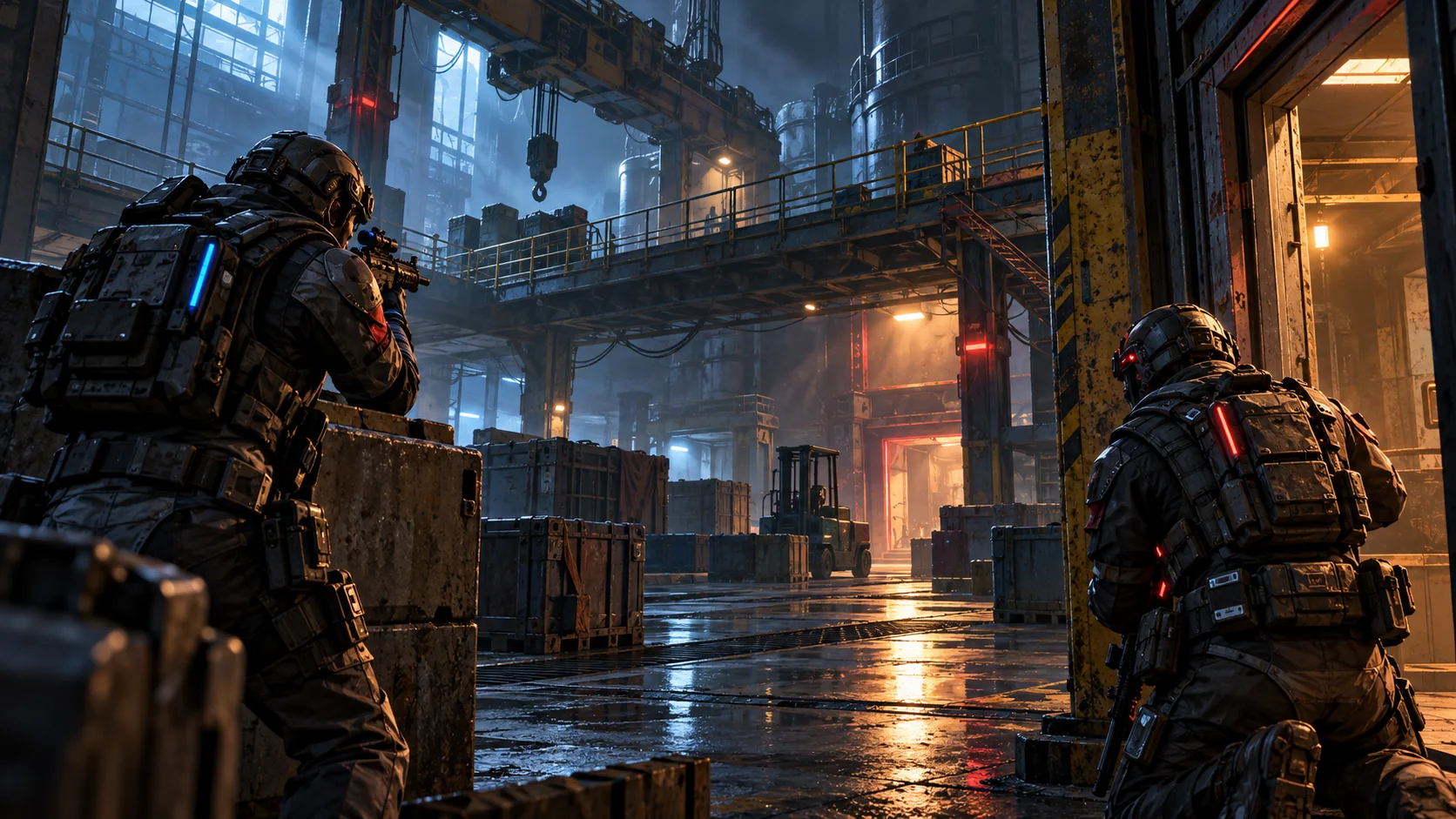
Every WolfTeam Legacy match carries the game's founding promise: at any moment, a player can stop being the human with the rifle and become the wolf. Wolf Hunt — shown in the room interface as "WolfHunt", in Turkish "Kurt Avı" — is the mode that turns that promise into the whole ruleset. Instead of two even teams trading bullets, a hunt starts with the server drafting a small wolf side out of your own lobby and asking one question: can the humans wipe out the wolves before the wolves recruit everyone?
This guide walks the mode the way the live server runs it today: how Wolf Kings are drafted, how the infection rule builds the wolf team out of human casualties, how rounds and matches end, which maps carry the mode, and its honest status on our compatibility table.
Where Wolf Hunt stands today
The build-compatibility table on our /guide page lists Wolf Hunt in one line together with Capture The Flag and Ex-Conquest: "Real client creation/map spawn; contested objective interactions remain experimental." — in Turkish, "Gerçek istemcide oda ve harita açılışı; çekişmeli hedef etkileşimleri deneysel." In plain words: you can create a hunt room in the real client, load its arenas and fight; the experimental label stays until every objective interaction has been fully accepted. As the page itself reminds, a visible menu option does not certify every map, objective or weapon combination.
The mode is also part of the server's recorded history. When we corrected PvP kill attribution in October, the public journal note explicitly named the mode: player kills are credited to the attacker in newly recorded PvP matches, "including Wolf Hunt". Hunts completed today leave the same kind of records as any other live player-versus-player room — kills, deaths, results and the standard progression rules that come with an eligible completed match.
How a hunt begins
You set up a hunt like any other room: pick the Wolf Hunt mode, choose a map and the usual limits (rounds, time, score), and wait for the room's ready check — a hunt's first round starts only after every participant has requested start, the same flow as every other room.
When a round begins, the server shuffles the active players and drafts Wolf Kings — the server's own name for the round's hunters. A room with fewer than eight active players gets one King; a room with eight or more gets two. Kings are placed on the wolf (red) side, and each King carries three lives. Everyone else starts on the human (blue) side, which keeps the game's ordinary respawn behaviour: the lives system is the wolf side's burden, not the humans'. The roster is re-sorted for the round, so the scoreboard shows the small wolf side and the human crowd it is hunting.
Nobody is drafted for the whole match. Each new round runs the draft again, so a King this round can be prey in the next one.
The infection rule
Wolf Hunt's signature mechanic is that the wolf team grows. When a human is killed by a wolf, the victim does not simply respawn on the human side — they rise on the wolf side as a normal wolf with exactly one life. A self-inflicted death converts nobody; the rule requires a wolf killer. This infection applies in every Wolf Hunt variant.
The wolf side's lives are public arithmetic. Each time a wolf dies, its life counter ticks down. A Wolf King who still has lives respawns on its own, without any revival request, so a King must be put down three times before the side feels it. A wolf with no lives left stays out of the round.
How rounds and matches end
A round resolves in the humans' favour when the wolf side empties out — every wolf converted or put down for good, or simply out of lives. It resolves in the wolves' favour when no human remains: every human either infected or eliminated. If the round clock expires with humans still standing, the surviving humans take the round — hiding is a strategy, and the clock is on their side.
The match itself uses the room's standard round target: the first side to reach the Wins limit you set at creation takes the match. If a side empties because players leave mid-round, the round is awarded to the side that stayed.
Dominate, Counterattack, Revolt
The client's map catalog publishes every Wolf Hunt arena under three rule variants: Counterattack, Dominate and Revolt. In the current build, Dominate is the one with an extra line in its contract: a wolf whose final life is taken by a human rejoins the human side instead of staying out. That single rule makes Dominate the swing variant — wolf numbers can genuinely shrink again, and careful human play can claw the lobby back to even. Counterattack and Revolt share the standard infection ruleset described above. Any team change clears the King flag, so a converted King fights on as an ordinary one-life wolf.
Every hunt map
Five arenas carry Wolf Hunt rows in the map catalog, plus the usual Random entry: Cage (KAFES), Secret Lab (Gizli Laboratuvar), Sector 7 (Bölge 7), Arrival (Giriş) and Junk Field (Hurdalık).
Two of them are Wolf Hunt's home grounds: Cage and Secret Lab are published for Wolf Hunt only, which makes them the natural rooms to join if you want a lobby that came for the hunt. Sector 7 is a shared multi-mode arena that also hosts standard deathmatch, sniper, grenade and heavy-weapon rules. Arrival and Junk Field are the veterans you already know from the early map guides — tight, readable layouts where a single King can control the middle and the humans can always regroup. If you want a refresher on their callouts, our map roster guide lists every arena and the modes each one supports.
The anti-wolf shelf
The shop remembers the mode even when you are between hunts. The special-items shelf carries the classic wolf-hunting tools: the HeartBeat Sensor and Sound Detector detectors, and the Silver Bullet cartridge whose card promises silver rounds — slightly weaker damage, far stronger stun — for wolf takedowns. Two more products name the mode directly in their classic flavor text: the SODB Shotgun and the EM-32 MC launcher cards both say they are intended for Wolf Hunt. As our pistol and launcher guides noted honestly, those "Wolf Hunt only" lines are inherited card lore; today both items are ordinary shop products, and the mode itself carries the experimental label above. Treat the shelf as atmosphere and stewardship of the original game, not as a promise of special mechanics inside this one mode.
Practical notes for both sides
Room size changes the draft. Below eight active players you face a single King; at eight or more, two Kings hunt together — and with infection feeding them, early discipline matters twice as much.
Humans: travel in pairs at minimum. Every human who dies alone near a wolf is a recruitment for the other side, and a snowballing wolf side is how hunts are lost in one round. Watch the clock — if the wolf side plays passively, simply surviving to the buzzer wins you the round.
Wolves: a King's three lives are the round's real budget. Trade them for conversions, not for vanity kills, and remember a converted wolf has exactly one life — make it a good one. In Dominate, expect the human side to pull wolves back, so hunt with the score, not just the kills.
And when you are the prey, it helps to know the monster: our wolf types and mutation guide explains the forms, abilities and controls the wolf side fights with, and the room settings guide covers the round, time and score limits you can set before the hunt begins. Report anything that looks wrong through the "Report an issue" flow on the guide page — mode, map, action and approximate time — so the experimental label can be lifted with evidence, not guesses.
More from the field journal
WolfTeam Legacy Ice Hold Mode Guide: One-Life Rounds, the Fewer-Deaths Tiebreak and All 11 Arenas
How WolfTeam Legacy Ice Hold (Uyku Modu) really works: one life per round, team elimination, the fewer-deaths rule when the clock expires, the forfeit rule, match win conditions, all eleven arenas and its honest two-player-acceptance status.
Read the guide ↗WolfTeam Legacy Sets and Packages Guide: What Every Bundle Grants and What It Really Costs
The WolfTeam Legacy shop sells 190 bundles across three shelves: weapon sets, mixed packages and hero outfit packages. How set purchases work, what each bundle grants, why 105 of them cost exactly the sum of their parts, and how bundles differ from boxes and backpacks.
Read the guide ↗WolfTeam Legacy Tattoo Guide: Wolf Back, Left and Right Tattoos, Themes, Sets and Prices
The WolfTeam Legacy tattoo shelf holds 303 designs for your wolf: back, left and right positions, 149 themes from Dragon to country flags, GL sets and a strictly bounded bonus system. Prices, families and honest card reading in one guide.
Read the guide ↗